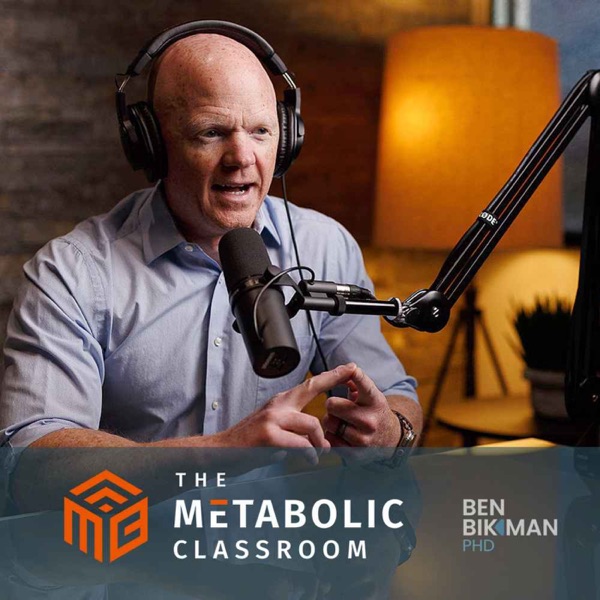
The Metabolic Classroom with Dr. Ben Bikman

The Metabolic Classroom with Dr. Ben Bikman

Insulin IQ

Welcome to The Metabolic Classroom, a nutrition and lifestyle podcast focused on metabolism, which is how our bodies use energy, and the truth behind why we get sick and fat. Every week, Dr. Ben Bikman shares valuable insights that you can apply in your own life and share with friends and loved ones. The Metabolic Classroom is brought to you by BenBikman.com and InsulinIQ.com.


Hosted on Acast. See acast.com/privacy for more information.

Listen to the last episode:

📢 Ask Dr. Bikman’s Digital Mind (multilingual):

https://benbikman.com/ben-bikmans-digital-ai-mind


📢 Dr. Bikman’s Community & Coaching Site: https://insuliniq.com


Topic:

Tirzepatide activates both GLP-1 and GIP receptors, producing weight loss primarily through appetite suppression, slower gastric emptying, reduced cravings, and improved insulin sensitivity—not by forcing the pancreas to make more insulin. Dr. Bikman argues that its best use may be as a temporary tool to help people regain control of food choices and lower the insulin-driving habits that caused metabolic dysfunction.


Summary:

In this mini-lecture, Dr. Bikman explains tirzepatide, the dual-incretin drug that activates both GLP-1 and GIP receptors. While it is often described as a drug that improves glucose by increasing insulin, Dr. Bikman argues that this explanation misses the bigger metabolic picture.


He begins by reviewing the incretin effect, where oral glucose produces a stronger insulin response than the same glucose given intravenously because the gut releases hormones such as GLP-1 and GIP. GLP-1 reduces appetite, slows gastric emptying, suppresses glucagon, and helps regulate glucose, while GIP has traditionally been viewed as more fat-storing because of its actions on fat cells.


Ben then resolves the “GIP paradox”: blocking GIP can cause weight loss in animals, yet activating GIP through tirzepatide also causes weight loss. The key, he argues, is insulin. GIP can amplify fat storage only when insulin is elevated, but tirzepatide lowers fasting insulin, reduces meal-related insulin demand, and reduces cravings for foods that drive insulin high. In that lower-insulin context, GIP may support healthier fat tissue function, improve adiponectin, reduce adipose hypoxia, and allow higher GLP-1 activity with better tolerability.


The practical takeaway is that tirzepatide should not be viewed as a magic weight-loss injection or a permanent substitute for lifestyle change. Used wisely, it may serve as a temporary tool to reduce carbohydrate cravings, improve satiety, lower insulin demand, and help people relearn healthier eating patterns.


References:

For complete show notes and references, we invite you to become an Insider subscriber. You’ll enjoy real-time, livestream Metabolic Classroom access which includes live Q&A with Ben after the lecture, unlimited access to Dr. Bikman’s Digital Mind, ad-free podcast episodes, show notes and references, and Ben’s Weekly Research Review Podcast. Learn more: https://www.benbikman.com


NOTE: The information presented is not intended to be a substitute for professional medical advice, diagnosis, or treatment. Dr. Bikman is not a clinician—and, he is not your doctor. Always seek the advice of your own qualified health providers with questions you may have regarding medical conditions.


Hosted on Acast. See acast.com/privacy for more information.

Previous episodes

  • 150 - Why Tirzepatide Works Better Than GLP-1 Alone 
    Mon, 18 May 2026 - 0h
  • 149 - The Hidden Signals That Make Fat Cells Grow 
    Mon, 11 May 2026 - 0h
  • 148 - Why Neuropathy Isn’t Just About Blood Sugar 
    Mon, 04 May 2026 - 0h
  • 147 - How Your Brain Talks to Your Pancreas (The Vagus Nerve Explained) 
    Mon, 27 Apr 2026 - 0h
  • 146 - The Muscle Biology Behind Diabetes Risk 
    Mon, 20 Apr 2026 - 0h
Show more episodes

More UK podcasts

More international podcasts

Choose podcast genre