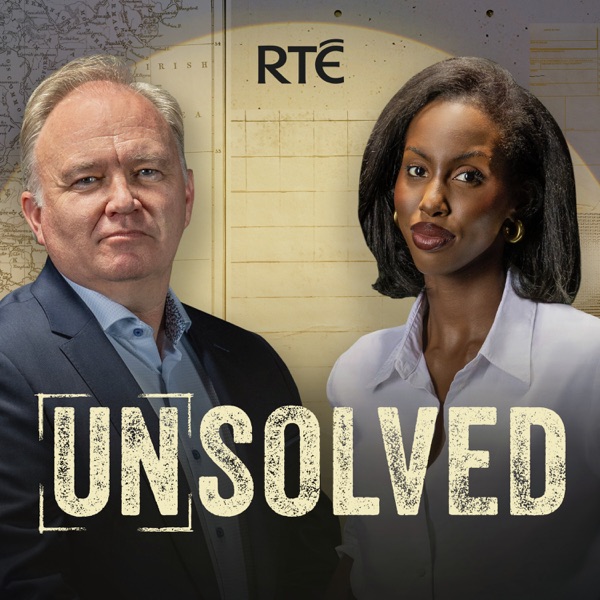
Some crimes don't get solved. Some families never get justice. Unsolved, hosted by award-winning crime journalist Barry Cummins and RTÉ presenter Katja Mia, is a true crime podcast made in the hope that someone listening knows something. In each episode, we investigate Irish cold cases with the victim firmly at the centre of the story, focusing on the lives behind the headlines, what we know about the crime that took them from their loved ones and the lasting impact it had. Get in touch at unsolved@rte.ie
00:00
00:00
Episode's summary
This episode explores the unsolved disappearance of Antoinette Smith, a young mother who vanished in 1987 after attending a David Bowie concert. The hosts delve into her personal life, including her private struggle with alopecia and the cultural landscape of Ireland during that era.
The investigation follows her final known movements through Dublin's nightlife and the subsequent search efforts. The episode also examines the initial lack of urgency from authorities and the media, discussing how the absence of a crime scene and the technological limitations of 1987 may have contributed to the case being overlooked, potentially marking the start of the 'Vanishing Triangle'.
Chapters
Click on a chapter to go directly to that moment
Highlights
When Antoinette kissed her two daughters Lisa and Rachel goodbye that summer's</i> day in Dublin, none of them had any idea that they would never see each other again.
00:00:13 · This quote establishes the tragic nature of the disappearance and the permanent separation of the family.
the bag's important because the bag has never been found.
00:10:33 · The disappearance of her Texaco bag is highlighted as a significant detail in the investigation.
it was completely normal in society to thumb a lift home because you didn't have Uber.
00:21:56 · The speaker explains the social norms of the 1980s regarding transportation and hitchhiking.
Obviously, before mobile phones and social media, you can't really put up a post to say someone you love is missing or someone you know is missing.
00:25:32 · The narrator highlights the difficulties in raising an alarm and organizing a search in an era without modern communication technology.
And Antoinette as an adult was entitled to go missing. If she wanted to, it wasn't a crime.
00:28:43 · The speaker explains why the Gardaí initially did not treat the disappearance with urgency because there was no evidence of foul play.
This episode explores the unsolved disappearance of Antoinette Smith, a young mother who vanished in 1987 after attending a David Bowie concert. The hosts delve into her personal life, including her private struggle with alopecia and the cultural landscape of Ireland during that era.
The investigation follows her final known movements through Dublin's nightlife and the subsequent search efforts. The episode also examines the initial lack of urgency from authorities and the media, discussing how the absence of a crime scene and the technological limitations of 1987 may have contributed to the case being overlooked, potentially marking the start of the 'Vanishing Triangle'.
Published26 Aug 2026
Duration35:43
Episodes
10-
Antoinette Smith - Part 1
Listened
This episode explores the unsolved disappearance of Antoinette Smith, a young mother who vanished in 1987 after attending a David Bowie concert. The hosts delve into her personal life, including her private struggle with alopecia and the cultural landscape of Ireland during that era.
The investigation follows her final known movements through Dublin's nightlife and the subsequent search efforts. The episode also examines the initial lack of urgency from authorities and the media, discussing how the absence of a crime scene and the technological limitations of 1987 may have contributed to the case being overlooked, potentially marking the start of the 'Vanishing Triangle'.
26 Aug 2026
9-
Fiona Pender - Part 3
Listened
This episode explores the investigation into Fiona Pender's 1996 disappearance, examining a potential lead involving a trial in Canada that resulted in a not guilty verdict. It also details the profound tragic impact of these unsolved crimes on the Pender family, including the loss of Josephine's husband and son.
The discussion covers the recent upgrade of Fiona Pender's case to a murder investigation in 2025, which grants significant new legal powers to investigators. Additionally, the episode touches upon the emotional legacy of her family and the commemorative sculpture and walkway in Tullamore dedicated to Fiona.
21 Aug 2026
8-
Fiona Pender - Part 2
Listened
This episode explores the disappearance of Fiona Pender in August 1996, detailing the intensive search efforts by her family and the local community. The investigation involved Garda searches of her flat and the use of borrowed cadaver dogs, highlighting the challenges faced due to a lack of specialized resources within the Garda dog unit.
The narrative follows major developments, including the April 1997 arrest of five suspects and the subsequent release of those individuals without charge. The episode also examines the discovery of a commemorative cross in Schlieffbloom woods and discusses how investigators have determined her case is likely unrelated to other missing persons from the 1990s.
19 Aug 2026
7-
Fiona Pender - Part 1
Listened
This episode explores the unsolved disappearance of Fiona Pender, a vibrant young woman from Tullamore who vanished in 1996 while pregnant. The hosts trace her life from her early career as a model and hairdresser to her return to Ireland with partner John Thompson following the tragic death of her brother.
The investigation delves into Fiona's final days in August 1996, examining her living situation and the last known interactions with her family. As her family discovered untouched baby supplies and no signs of struggle in her bedsit, the search began—a search that continues decades later as the family seeks justice for Fiona and her unborn child.
12 Aug 2026
6-
Raonaid Murray - Part 2
Listened
This episode explores the 1999 unsolved murder of 17-year-old Reynaud Murray. The discussion details the timeline surrounding the attack in 'the cut,' including potential sightings of an unidentified man and the brutal nature of the incident.
The investigation involved massive efforts, including 14 arrests and thousands of statements, yet the case remains unresolved. The episode follows the discovery of Reynaud's body by her family and highlights the ongoing plea from her parents for someone to come forward and help achieve justice.
05 Aug 2026
5-
Raonaid Murray - Part 1
Listened
This episode explores the unsolved murder of 17-year-old Raynaud Murray, an ambitious Dublin teenager who dreamed of becoming a writer. The investigation details her final day on September 3, 1999, tracing her movements from her retail shift in Dun Laoglaire to meeting friends for drinks.
Despite extensive investigations involving thousands of interviews and numerous arrests, the case remains cold. The episode follows Raynaud's last known movements via CCTV as she walked home, marking the moment she disappeared before she could reach her destination.
04 Aug 2026
4-
Bonus Episode: The Killing of Hannah Williams
Listened
This episode details the investigation and conviction of Robert Howard for the 2002 murder of 14-year-old Hannah Williams. It explores how a combination of circumstantial evidence, including a pivotal 14-second phone call and similar fact evidence regarding the use of ropes, led to his guilty verdict and provided the momentum for the PSNI to charge him with the murder of Arlene Arkinson.
The discussion also examines the legal complexities surrounding Howard's trials, specifically how reporting bans prevented journalists from disclosing his status as a convicted murderer. Additionally, it explores why similar fact evidence was not introduced during the Arlene Arkinson trial due to a specific decision made by the prosecution.
29 Jul 2026
3-
Arlene Arkinson - Part 2
Listened
This episode investigates the unsolved disappearance of Arlene Arkinson and the criminal trajectory of primary suspect Robert Howard. It explores Howard's history of escalating violence, his movement between Ireland and Scotland, and the systemic failures and legal reporting bans that hindered justice.
The narrative follows the Arkinson family's struggle with police investigations and details the trial of Robert Howard. Despite a coroner's eventual ruling identifying Howard as responsible for Arlene's death, the episode examines the complexities of his acquittal and the lasting impact of his crimes.
29 Jul 2026
2-
Arlene Arkinson - Part 1
Listened
This episode investigates the unsolved 1994 disappearance and murder of 15-year-old Arlene Arkinson in County Donegal. The hosts detail Arlene's personal background and the events of the night she went to a disco, focusing on her journey in a car driven by Robert Howard, a man with a history of serious sexual offenses.
The discussion explores the suspicious circumstances surrounding the trip to Bundoran and the subsequent investigation. It highlights the web of lies orchestrated by individuals close to Howard to protect him, and how the silence was eventually broken by Donna Quinn, whose statement provided crucial evidence in the case.
29 Jul 2026
1-
Unsolved: Introduction
Listened
Crime journalist Barry Cummins and RT presenter Katia Mia introduce Unsolved, a new true crime podcast from RTE dedicated to revisiting Ireland's most significant cold cases. The series aims to shift the focus from perpetrators to the victims, providing a voice to those lost to unsolved crimes, particularly women. By examining the facts and exploring the psychological impact of these disappearances and murders, the hosts seek to uncover secrets held within communities.
The premiere episodes focus on the case of Arlene Arkinson, a 15-year-old girl who disappeared in Bundoran in August 1994. The podcast explores the details surrounding her disappearance and the broader context of a serial killer operating across Ireland. Through deep dives into these historical cases, the program seeks to provide new information and pursue justice for victims whose stories have often been overshadowed.